

Signs of ADHD in Adults: What to Look For and When to Seek Help
If you’ve ever struggled with focus, procrastination, or feeling overwhelmed by everyday tasks, you may have wondered if something more is going on.
ADHD in adults is often misunderstood and frequently missed. Many people assume ADHD only affects children, but for many adults, symptoms persist or go unrecognized for years.
The good news is that ADHD is treatable, and with the right support, it’s possible to improve focus, reduce overwhelm, and feel more in control of your daily life.
What ADHD Looks Like in Adults
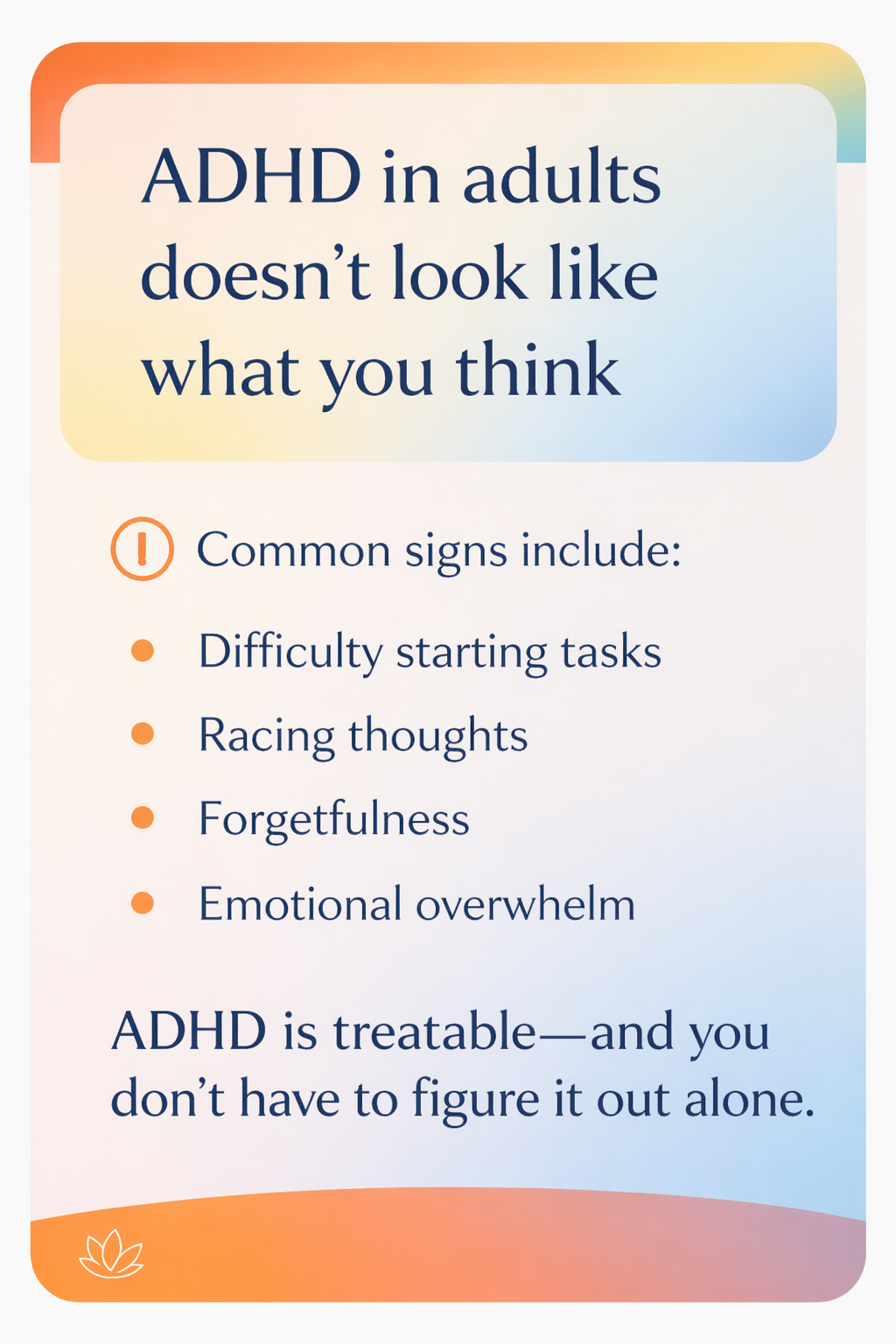
ADHD doesn’t always look like hyperactivity. In adults, it often shows up in more subtle, but still disruptive, ways.
Common signs include:
Difficulty starting or completing tasks
Chronic procrastination
Trouble staying organized
Forgetfulness (appointments, deadlines, details)
Feeling mentally overwhelmed by simple responsibilities
Difficulty focusing, especially on tasks that aren’t interesting
Frequently switching between tasks without finishing them
Emotional overwhelm or frustration
Many adults describe feeling like they’re constantly “behind” or working harder than others just to keep up.
Why ADHD Often Goes Undiagnosed
There are several reasons ADHD is missed in adults:
Symptoms are mistaken for anxiety, stress, or burnout
High-functioning individuals develop coping strategies
Lack of awareness about adult ADHD
Stigma around mental health
Because of this, many people struggle for years without understanding what’s actually happening.
ADHD vs. Anxiety or Burnout
ADHD can overlap with anxiety and burnout, but they are not the same.
ADHD → difficulty with focus, organization, and follow-through
Anxiety → excessive worry, overthinking, physical tension
Burnout → exhaustion, low motivation, feeling drained
It’s also common for these conditions to occur together, which is why a comprehensive evaluation is important.
How ADHD is Treated
ADHD treatment is highly individualized and may include:
Medication management to improve focus and attention
Practical strategies for organization and task completion
Therapy approaches such as Cognitive Behavioral Therapy (CBT)
Support for co-occurring conditions like anxiety or depression
The goal of treatment isn’t to change who you are — it’s to help you function in a way that feels more manageable and aligned with your life.
When to Seek Help
If you’re consistently struggling with focus, follow-through, or feeling overwhelmed, it may be worth exploring whether ADHD is a factor.
You don’t need to have everything figured out before reaching out.
A professional evaluation can help provide clarity and guide you toward the right support.
You don’t have to keep trying to manage this on your own.
At Uplifting Oasis, we provide telehealth ADHD evaluations and treatment across Arizona, including Phoenix, Scottsdale, and surrounding areas.
Adult ADHD Symptoms